
If you smell gas, leave first
Natural gas has an added odor, often described as rotten eggs, so leaks are easier to notice. If you smell it strongly, hear hissing, or your carbon monoxide alarm sounds, leave the house immediately. Take everyone, including pets, and do not stop to open windows or switch anything on or off. Call your gas utility emergency line or 911 from outside.
- Do not light matches, lighters or candles.
- Do not flip light switches, use garage door openers or start a car in an attached garage.
- Do not use a phone inside the house.
- Do not go back in until the utility or fire department says it is safe.
Warning signs of a gas leak
| Sign | What it may mean |
|---|---|
| Rotten egg smell. | Gas escaping from a pipe, appliance or meter. |
| Hissing near a pipe or appliance. | Active leak. |
| Dead plants near a buried line. | Possible underground leak. |
| Bubbling in standing water outside. | Possible underground leak. |
| Yellow or orange flame on a burner instead of blue. | Combustion problem, not always a pipe leak. |
| Headaches, nausea, dizziness indoors. | Possible carbon monoxide, leave and call 911. |
A smell that seems faint can still be a leak. Treat any doubt as real.
Who does what
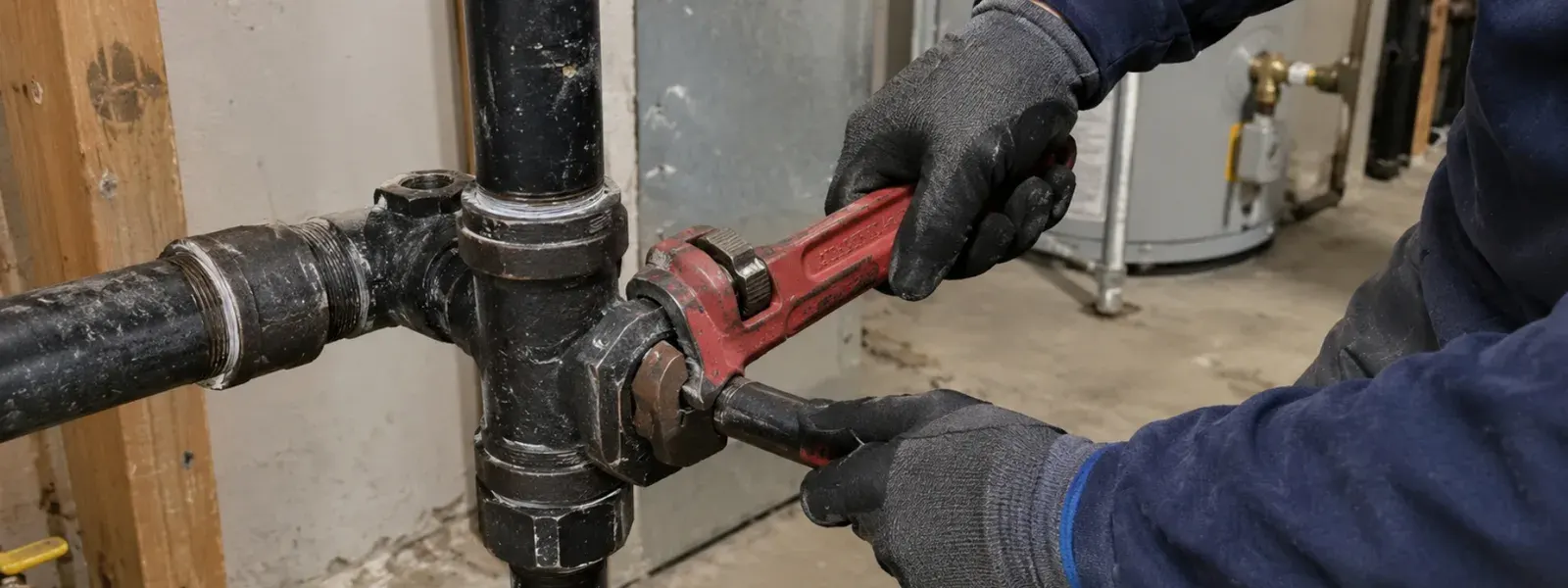
The gas utility shuts off supply and tests for leaks on the utility side of the meter. After that, a licensed plumber or gas fitter finds and repairs leaks in your house piping and appliances. Do not try to find a leak with a flame. Soapy water on a joint is a trade technique, and it is not a substitute for a professional pressure test.
Repairs on gas piping are licensed work. Even a small fix, such as replacing a flexible connector, requires care. A professional tests the repair before supply is restored.
After the utility clears the house
- Have the cause identified and repaired by a licensed pro.
- Ask for a pressure test after any repair.
- Test carbon monoxide detectors and replace old ones.
- Schedule appliance inspections, including water heaters and boilers.
- Keep the area around gas meters clear of snow and ice.
Water heater and boiler problems often involve gas connections. Our water heater repair and boiler repair pages explain how we handle appliance symptoms, and the safety first rule above comes before everything else.
Prevent leaks before they start
Appliances age, flexible connectors corrode, and renovations can disturb piping. Have gas appliances checked yearly, avoid storing items against gas lines, and call 811 before any digging so buried lines are marked. If you plan a new range, dryer or fireplace, let a licensed professional size and run the gas line.
Carbon monoxide is a separate danger
Carbon monoxide is odorless and comes from incomplete combustion in furnaces, boilers, water heaters, stoves and vehicles. Natural gas leaks and carbon monoxide are different problems with different warning signs. A detector is the only way to notice carbon monoxide. Put detectors on every level and near sleeping areas, test them monthly and replace them as the maker says.
If the alarm sounds, get everyone outside, call 911 and wait for responders. Do not reenter to silence the alarm. Appliance repairs wait until the house has been cleared and the source found.
Appliances that commonly cause gas smells
| Appliance | Typical source of smell | Action |
|---|---|---|
| Range or cooktop. | Unlit burner or loose connection. | Turn off, ventilate, call if the smell remains. |
| Water heater. | Pilot out or fitting leak. | Shut off the gas valve if safe, call a pro. |
| Furnace or boiler. | Connection or heat exchanger. | Leave if strong, call the utility. |
| Dryer or fireplace. | Flex connector or valve. | Shut off and call. |
A brief puff of odor when a burner is lit is not unusual. A smell that lingers is not normal. If in doubt, treat it as a leak and leave the house first.
Plan ahead before an emergency
Save your gas utility emergency number in your phone now. Teach everyone in the household what the gas smell is and what to do. Know where the gas shutoff at the meter is, though you should only close it if the utility tells you to or you cannot leave. Keep a flashlight near the exit, because the rule is no switches. A few minutes of planning turns panic into a routine.
Renovations and gas lines
Gas lines are easy to damage during a remodel. A nail through a wall, a hole drilled for a new outlet or a moved appliance can all affect gas piping. Before any work, ask the contractor where gas lines run and who will handle changes to them.
Only licensed professionals should cut, extend or cap gas piping, and a pressure test should follow. If your kitchen or laundry is changing, bring the plumber in at the planning stage so the gas side is designed once and done safely.
Teaching the household
Walk everyone through the plan once a year. Show them where the exit is, how to leave without touching switches and which number to call. Children and visitors should know the rule too. Practice takes five minutes and makes the right move automatic.
Landlords and shared buildings
In a multi-unit building, the gas shutoff and the rules for evacuation should be posted and understood by every tenant. Owners should keep records of appliance inspections and make sure detectors work in each unit. After any suspected leak, the utility and a licensed professional must clear the building before anyone returns.
Gas safety in Massachusetts and Grafton
Gas piping work in Massachusetts is governed by the state plumbing and gas code, 248 CMR 10.00, and performed by licensed plumbers and gas fitters. Verify a license with the state Board of State Examiners of Plumbers and Gas Fitters lookup. Ask the Grafton building department which permits and inspections apply to gas work at your address.
Your gas utility publishes its own emergency number, usually printed on your bill and posted on its website. Save it in your phone now. Massachusetts also requires Dig Safe notification before excavation, so call 811 at least before any digging project.
Common questions
What should I do if I smell gas?
Leave the house, then call your gas utility emergency line or 911 from outside.
Can I find a gas leak with soapy water?
That is a trade technique, but it does not replace a professional test. Leave suspected leaks to professionals.
Do I need a carbon monoxide detector?
Yes. Place them on each level and test them regularly.
Who repairs gas piping inside my house?
A licensed plumber or gas fitter.
Who do I call for a gas emergency in Grafton?
Call your gas utility emergency number or 911 from outside the home. The number is printed on your bill.