
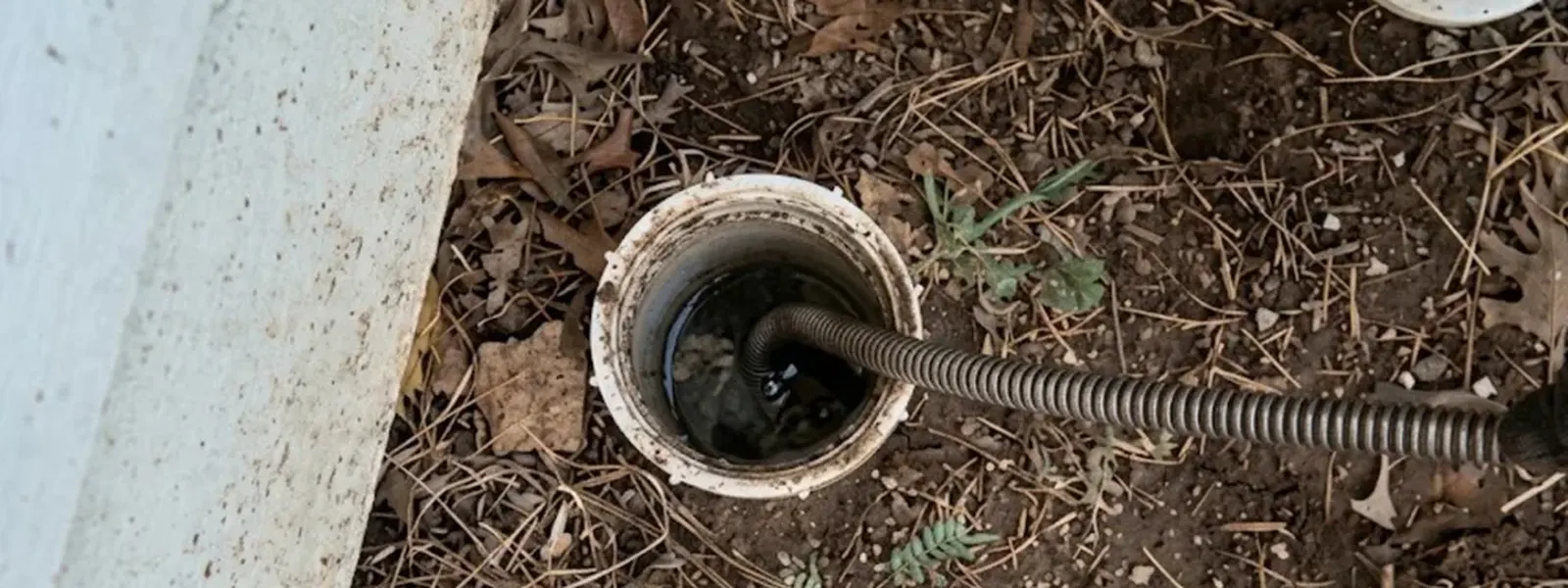
How a main line clog shows up
The main line carries every drain in the house to the sewer or septic tank. When it blocks, the lowest drains fail first, usually a basement floor drain, shower or tub. Several fixtures slow or back up at once, and flushing a toilet may push water up somewhere else.
Gurgling, sewage odor and water rising in a floor drain after laundry are classic signs. Treat sewage as a health hazard. Keep people away and avoid contact.
Common causes
| Cause | Clue | Typical remedy |
|---|---|---|
| Tree roots. | Repeat clogs, older clay or cast iron lines. | Cable or hydro jet, then repair. |
| Grease buildup. | Kitchen-related slowing over months. | Hydro jet. |
| Flushed wipes or paper towels. | Sudden clog. | Cable or jet. |
| Sag or bellied pipe. | Recurring clogs in the same spot. | Camera, then repair. |
| Collapsed pipe. | Cleaning tool cannot pass. | Repair or replacement. |
A camera shows the real cause. Without it, a plumber clears the blockage and the problem returns in a few months. Our sewer inspection page explains what you see on screen.
How plumbers clear it
- Cable machine: cuts through roots and soft blockages.
- Hydro jetting: high-pressure water scours the pipe walls, see hydro jetting.
- Camera inspection: confirms the cause and checks the pipe condition.
- Spot repair or replacement: when damage is found, see sewer line repair.
Clearing the blockage is the emergency. Repairing the cause is the plan that follows. We describe both so you can decide in order.
What to do while you wait
- Stop using water everywhere.
- Do not flush toilets or run the washer or dishwasher.
- Keep people and pets away from affected areas.
- Open windows if there is odor.
- Photograph damage for insurance.
- Locate the cleanout and keep the area clear.
Our sewer line cleaning page explains the emergency visit. Insurance sometimes covers sewage backup damage with a rider, so read your policy.
Preventing the next one
Wipes, grease and roots cause most repeat clogs. Do not flush wipes, even if they are labeled flushable. Scrape grease into the trash. If roots are known to be a problem, regular cleaning keeps them manageable. A backwater valve can protect basements in homes that have had repeat backups.
When to expect a camera visit
A first clog on a sound line can be cleared and forgotten. A second clog within a year is a pattern, and the camera is the right next step. The recording shows roots, sags and cracks and lets you decide with facts.
You can also share it with an insurer or a buyer. If the line is sound, a maintenance schedule may be all you need. If it is not, repairs cost less when planned than when forced by a backup.
Things to avoid while waiting
- Do not try to force a clog with a garden hose.
- Do not mix different drain chemicals.
- Do not run the washing machine hoping it will push the clog through.
- Do not enter a basement with standing water if outlets or appliances are submerged.
The cleanout: your best friend in a backup
A cleanout is a capped pipe that gives a plumber direct access to the main line. Knowing where yours is saves time. Look in the basement near the foundation wall where the main leaves the house, or outside near the foundation. Keep the area clear and never remove the cap if the line is full of sewage, because pressure behind it can release suddenly.
If your house has no cleanout, ask for one to be installed during the repair. Adding it is a small expense that makes every later cleaning easier and cheaper.
Commercial and multi-family differences
In a duplex or small apartment building, one shared line serves several households. A clog affects everyone and finding the cause means asking all tenants what changed. Ask neighbors to stop running water until the line is cleared, and give the plumber a quick description of which units are affected.
Questions to ask the plumber
Ask what tool will be used, what it found and whether a camera confirmed the line afterward. Ask if the pipe shows damage and whether repair or monitoring is the better next step. Ask for a written note of the cause and any warranty on the clearing. Clear answers mean you can decide on facts.
Tree roots, in plain language
Roots grow toward moisture and enter through tiny gaps at pipe joints. Once inside, they thicken and catch paper and grease, and the line slowly closes. A cable machine cuts them back. They grow again.
The lasting fix is to seal or replace the damaged joint, or to line the pipe if it is suitable. Chemical root killers can help but do not repair the pipe, and many are harsh on the environment. If trees are close to your line, ask for a camera look every couple of years.
After heavy rain
Some backups happen only in big storms, when groundwater or storm flow overloads the system. That pattern points to a different cause than roots or grease, and may involve the town main or a cross connection. Tell the plumber when the backups occur, because timing is a clue.
Keeping records of every service
Write down the date, the cause and what the plumber found each time the line is cleared. Share the notes with the next plumber. A history of the same blockage in the same spot tells a story that a single visit cannot.
Sewer lines, septic and Grafton rules
Responsibility for sewer pipe differs by address. In many Massachusetts towns the owner maintains the lateral from the house to the street main. Ask the Grafton Department of Public Works or the town office where that line changes hands. Homes on septic fall under Title 5 and are overseen by the Grafton Board of Health, so a backup there may need a septic professional.
Plumbing is governed by the Massachusetts code, 248 CMR 10.00, and must be done by licensed plumbers. Call 811 before excavation so utilities are marked. Ask the Grafton building department whether a sewer repair needs a permit.
Common questions
Is a main sewer line clog an emergency?
If sewage is coming up inside the house, yes. Stop using water and call.
Can I clear a main line myself?
A small auger can help with a local clog, but a main line usually needs professional equipment.
Why does the clog keep returning?
Roots, a sagging pipe or damage. A camera finds the cause.
Will insurance cover sewer backup?
Some policies add coverage by rider. Check yours.
How do I know if my Grafton home is on sewer or septic?
Check your bill and property records, or ask the town. Septic homes are overseen by the Board of Health.