
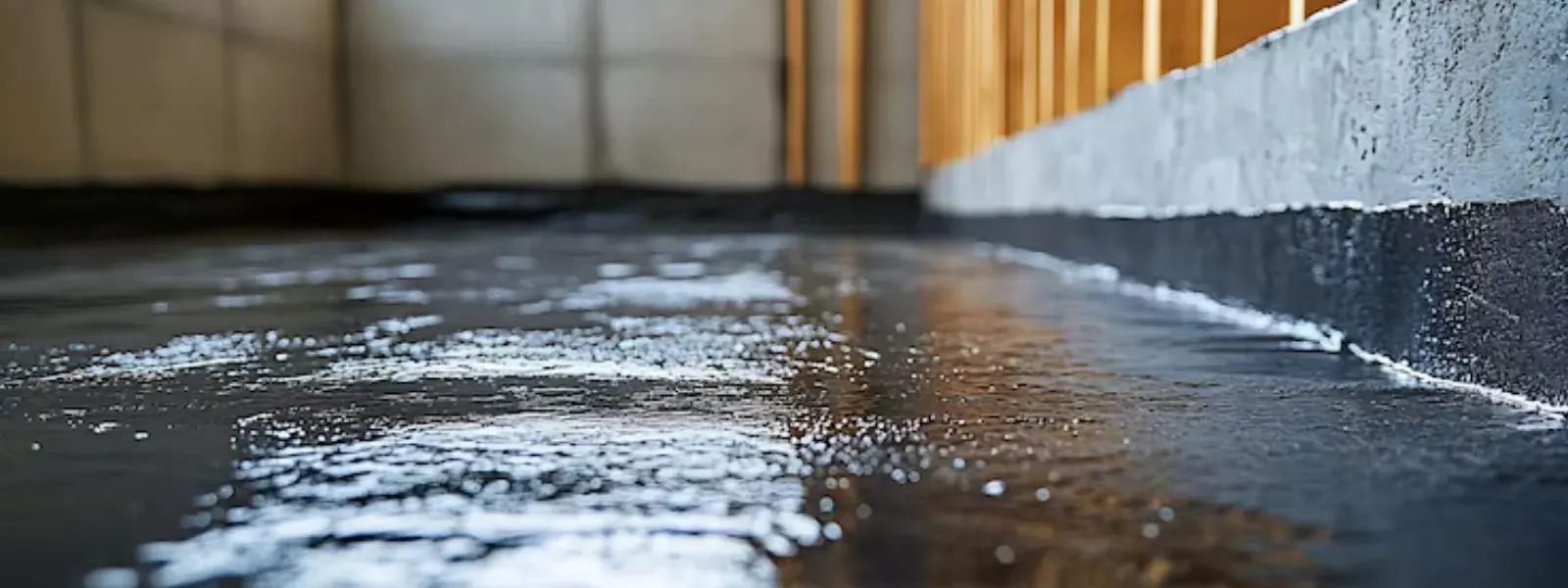
Why new basements still get wet
A new foundation is not automatically dry. Concrete is porous, joints move as the structure cures, and backfill settles. Water finds the weakest path, usually the joint where the wall meets the floor. Builders differ widely in what they include, so ask what is in your contract rather than assume.
Waterproofing is different from damp-proofing. Damp-proofing is a thin coating that slows moisture. Waterproofing is a membrane or system built to resist water pressure. Know which one your builder is quoting.
Layers of a dry basement
| Layer | Job | Ask your builder |
|---|---|---|
| Footing drain. | Collects groundwater at the footing. | Is it installed, and where does it drain? |
| Wall membrane. | Keeps water out of the wall. | Waterproofing or damp-proofing? |
| Gravel and fabric. | Lets water reach the drain. | Is clean stone used against the wall? |
| Sump pit and pump. | Removes collected water. | Is a pit roughed in? Is there a backup? |
| Grading and gutters. | Sends surface water away. | What slope is planned? Where do downspouts end? |
Roughing in a sump pit at construction costs little. Cutting one into a finished slab costs far more. See sump pump repair and basement waterproofing for how the system works.
Plumbing details that matter in a new build
- Rough in a floor drain at the lowest point, with a trap primer or a plan to keep the trap wet.
- Rough in plumbing for a future bathroom while the slab is open.
- Locate the main water shutoff where you can reach it.
- Plan the sump discharge before the landscaping.
- Keep sewer cleanouts accessible.
These rough-ins are what plumbers wish they had when they open a finished slab later. Plumbing installation explains how we plan fixtures around the structure.
Grading, gutters and the site
Many wet basements are a surface water problem that was never a foundation problem. Downspouts that end at the wall pour water into the backfill, which settles and traps it against the foundation. Plan for downspout extensions or pipe to daylight, and set final grade to slope away from the house on all sides.
Walk the lot after the first big rain. Water pooling near the foundation is cheap to fix with soil and a downspout extension, and expensive after the lawn is down.
Before you close on the house
If you are buying rather than building, ask for the builder drainage details, check the sump pit and pump, and look for efflorescence, a white chalky residue on the basement walls that shows moisture has passed through. Test the pump yourself with a bucket of water.
Radon, vapor and the slab
A new slab usually sits on gravel with a vapor barrier under it. Ask whether a radon pipe is roughed in under the slab, since it is cheap to add during construction and expensive afterward. The same gravel layer helps water reach the sump pit. Penetrations for plumbing, such as floor drains and sleeves, should be sealed so moisture and gases do not rise through them.
Hand-off checklist at move in
- Photograph the sump pit, pump and discharge before furnishing the basement.
- Test the pump with a bucket of water.
- Note where the main shutoff and cleanouts are.
- Ask for copies of drainage and plumbing permits and inspections.
- Check that downspouts extend away from the house.
Walk the site with your builder
Ask the builder to show the footing drain outlet, the gravel against the wall and the membrane before backfill. Photographs are the best record. Request a copy of the grading plan and look for swales that move surface water around the house. Check where the sump will discharge and how the discharge will drain in winter.
If something is missing at the walkthrough, ask for it in writing. A builder who has to dig back up will tell you later what it cost. Before backfill is the cheapest time to do things right.
Plan for the finished space
If you intend to finish the basement later, plan the sump pit, floor drain, plumbing rough-ins and electrical outlets now. Leave access to cleanouts and the main shutoff. A finished basement that hides valves and cleanouts turns small problems into demolition. Keep a simple diagram of where pipes run before the walls close.
Seasonal checks in the first year
New foundations settle and backfill compacts. Walk the perimeter after the first heavy rain and the first thaw. Top up soil where it has sunk, clear the gutters and run the sump pump. Catching a low spot in the first year costs a shovel of soil, not a drainage system.
Warranty questions to settle before closing
Ask what the builder warranty says about water in the basement. Some cover only structural defects, and some exclude seepage or require you to maintain grading and gutters. Get the terms in writing and note the time limit.
Keep your own records too. Photographs taken at move in, receipts for maintenance and notes on when water appeared help if you need to make a claim. A builder is more likely to respond to a dated record than to a vague memory.
Why photographs matter
Pictures taken before backfill show what is buried: the membrane, the drain, the stone. If you ever need to dig, they tell you where to start. Ask the builder to send them, or take your own during a site visit.
New construction rules in Grafton
New construction in Massachusetts is governed by the state building and plumbing codes, including 248 CMR 10.00 for plumbing, and permits and inspections run through the local building department. Ask the Grafton building department for current requirements for your lot, since the town handles permitting online.
Grafton lies in the Blackstone River watershed with brooks and wetlands in town. A lot near wetlands may be subject to conservation review, which can affect drainage and sump discharge. Check with the town before finalizing your site plan. If the home will be on septic, the Grafton Board of Health reviews the design.
Common questions
Is damp-proofing the same as waterproofing?
No. Damp-proofing slows moisture. Waterproofing is built to resist water pressure.
Should a new basement have a sump pit?
Roughing one in is inexpensive during construction and wise on lots with groundwater.
What is the white residue on basement walls?
Efflorescence, mineral deposits left when moisture passes through concrete.
Can gutters affect basement dryness?
Yes. Downspouts that end at the foundation are a common cause of seepage.
Do wetlands near a Grafton lot affect basement drainage plans?
They can. Lots near wetlands may need conservation review. Ask the town before you finalize drainage and sump discharge.