
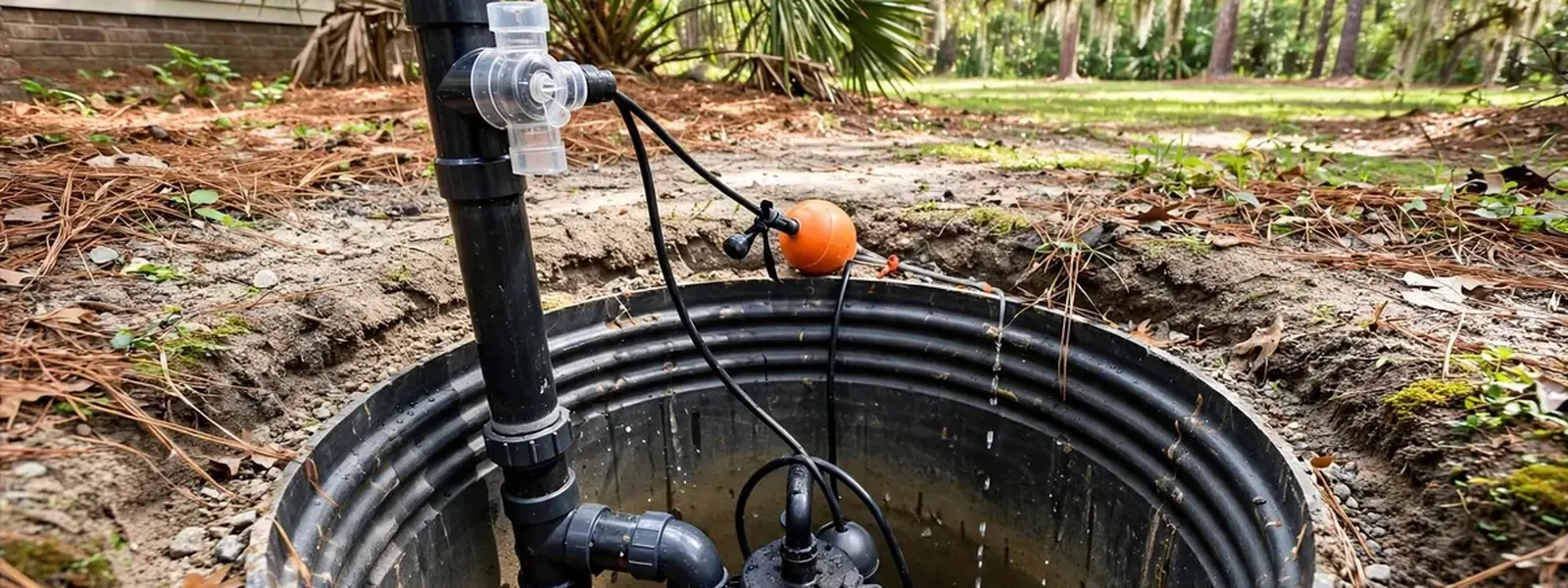
What the discharge pipe has to do
The pump lifts water out of the pit. The discharge pipe carries it away from the house. If that water returns to the foundation, freezes in the line, or backs down into the pit, the pump cycles again and again until it wears out. A well-planned discharge keeps the water gone.
The line should rise from the pump, pass through a check valve, exit the house above grade through the rim joist or wall, and end in a spot where water drains away from the foundation and does not pool near neighbors.
Pipe size, check valve and routing
| Part | Guideline | Why |
|---|---|---|
| Pipe size. | Match the pump outlet, commonly 1.5 inch. | Neck-downs choke flow. |
| Check valve. | One, near the pump, accessible. | Stops water running back into the pit. |
| Slope outside. | Steady fall away from the house. | Prevents standing water and freezing. |
| Exit point. | Several feet from the foundation, above grade. | Keeps water from returning. |
| Weep hole. | Small hole below the check valve in some designs. | Prevents airlock, discuss with a plumber. |
Use solid pipe and glued joints inside the house. Use unions or a flexible coupling where the pump may need service. Support the pipe so vibration does not loosen it.
Freeze protection and where the water goes
A discharge line that freezes shut turns the pump into a motor with nowhere to push water. Keep the outside run short, sloped to drain, and fitted with a freeze-relief or open-end design that lets water escape if ice forms. Never bury a discharge line without a slope.
Discharge onto your own property, downhill and away from the house. Do not point it at a neighbor, a road, a septic field or a wetland. Water in a sump discharge can carry silt and, in winter, create an ice hazard on walkways.
Never connect it to the sewer or septic
Sump water does not belong in sanitary sewers or septic systems. Clean groundwater overloads a treatment system and raises the cost of treatment for the whole town. Many communities forbid the connection, and a septic tank flooded with groundwater can fail. Our sump pump repair page covers pump problems, and basement waterproofing explains how pumps fit into drainage.
Backup and alarms
- Battery backup keeps the pump running in an outage.
- A water alarm gives early warning.
- A second discharge line is rarely needed unless the primary is hard to reach.
- Test the system in spring and fall by pouring water into the pit.
A properly installed discharge often costs less to fix than the damage from one failed storm. If you are building or remodeling, plan the route before the walls close.
Common mistakes we see
- Discharge ending right at the foundation wall so water runs back in.
- A flexible corrugated hose with dips that hold water and freeze.
- No check valve, so each cycle refills the pit.
- Discharge pointed at a neighbor or across a walkway.
- Burying the line without a slope.
- A union or fitting that leaks inside the house.
Fixing the discharge is usually cheaper than replacing the pump. If your pump seems to work all the time, check the line before you blame the motor.
Pumps also work harder when the discharge is long, uphill or has many elbows. Every bend adds resistance. Keep the route short and direct, with as few turns as possible, and measure the vertical lift from the pit to the exit point so the pump can be sized properly.
Inspecting your discharge each season
Walk the outside run in spring and fall. Look for cracks, crushed sections and a clear outlet. Run the pump with a bucket of water and watch the water leave the pipe. Check that it does not return toward the house. If it dribbles out slowly, there may be an obstruction or a failing pump. A few minutes of inspection in the dry season saves emergency work in a storm.
Why a loud pump matters
A pump that thumps, rattles or shakes the pipe each cycle may have a loose connection, a missing check valve or a water hammer problem. Fixing it protects joints and makes the system last longer. Wrap the discharge pipe where it passes through the rim joist so vibration does not carry into the house structure.
When to call a plumber
Call if the pit fills faster than the pump empties it, if the discharge freezes every winter, if water returns to the foundation or if you are unsure where the water should go. A plumber can reroute the line, add a check valve and set the pump up so storms stay outside.
Gravity, lift and why they matter
A pump works harder the higher it must lift water, and every foot of vertical rise adds load. A long, flat run with a small slope adds friction. Together they set how fast water leaves the pit. A discharge that is too long or too high can leave a pump struggling even when it is new.
If your pit refills faster than it empties during storms, measure the vertical lift and the pipe length. A plumber can compare them with the pump curve and tell you if a stronger pump or a shorter route solves it. Sometimes shortening the run is cheaper than buying a larger motor.
Protecting the pipe from lawn work
Mow and trim around the outlet with care, and mark buried sections so a shovel or aerator does not crush them. Keep leaves and debris off the outlet grate. Small habits like these keep a good discharge working for years.
Sump pump discharge in Grafton
Rules on connecting sump pumps to sewer systems and on drainage to wetlands vary by municipality. Ask the Grafton building department and the Grafton Board of Health before changing a discharge route, especially near septic systems, brooks or wetlands. Plumbing work is governed by the Massachusetts code, 248 CMR 10.00.
Grafton lies in the Blackstone River watershed, so discharge near brooks and low ground can matter to neighbors and conservation rules. Confirm with the town before you route water toward a wetland.
Common questions
What size should a sump discharge pipe be?
Match the pump outlet. Many residential pumps use 1.5 inch pipe. Do not neck down.
Do I need a check valve?
Yes. It keeps water from flowing back into the pit.
Can I connect the discharge to my septic system?
No. Clean groundwater can overload a septic system.
How far from the house should the discharge end?
Several feet or more, sloping away from the foundation.
Who do I ask in Grafton about sump discharge rules?
Start with the Grafton building department and the Board of Health, especially near septic systems or wetlands.