
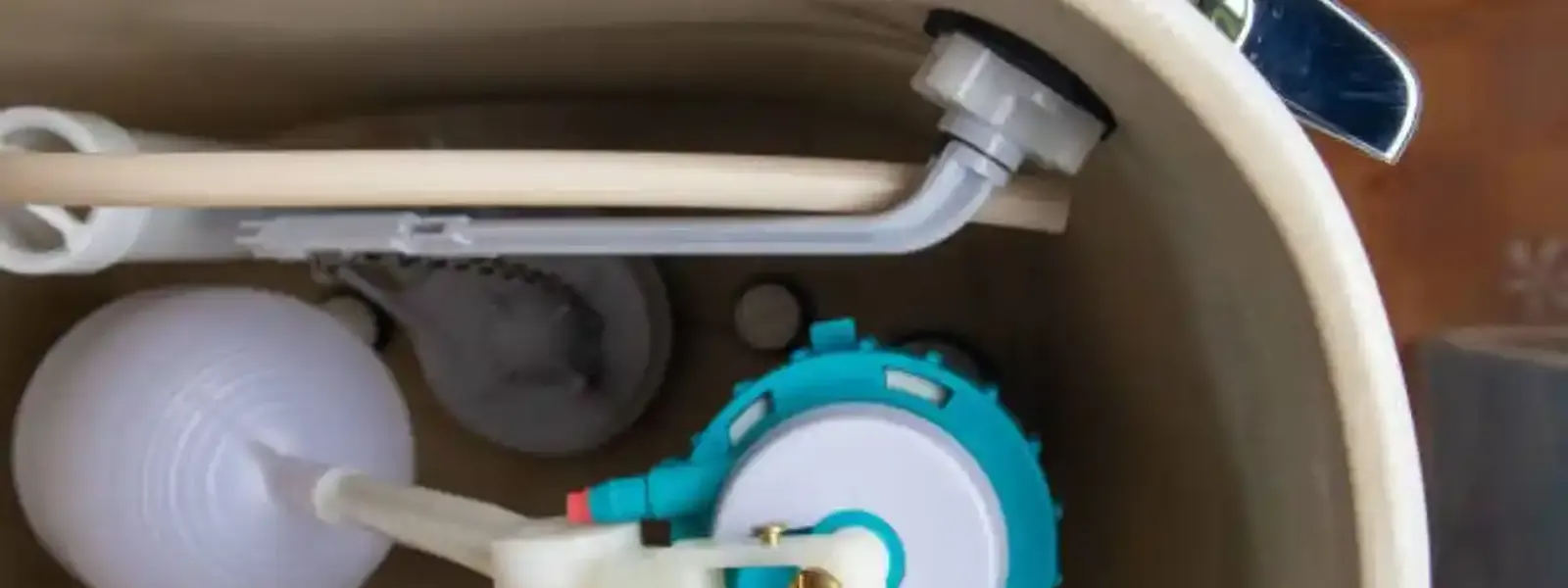
Start with what the tank is doing
A toilet tank holds a fixed amount of water, releases it through a flapper when you flush, then refills through a fill valve until a float shuts the water off. Almost every tank complaint is one of those three parts misbehaving. Before you buy anything, watch the tank for a minute with the lid off and match what you see to the table below.
| What you see or hear | Likely part | Usual fix |
|---|---|---|
| Water trickles into the bowl, tank refills every few minutes. | Worn flapper or flush valve seat. | Replace the flapper. |
| Tank keeps filling and water runs into the overflow tube. | Fill valve or float set too high. | Adjust the float or replace the fill valve. |
| Hissing after the flush that never quite stops. | Fill valve failing. | Replace the fill valve. |
| Weak flush. | Low water level or clogged rim jets. | Raise the level, clean the jets. |
| Water on the floor around the base of the tank. | Tank bolts, washers or the supply connection. | Replace the bolt gaskets or the supply line. |
If you cannot tell which row fits, put a few drops of food coloring in the tank and wait fifteen minutes without flushing. Color in the bowl means the flapper is leaking.
Fixes you can safely do yourself
Close the shutoff valve behind the toilet by turning it clockwise, flush to empty the tank, and sponge out the last of the water. Now the parts are easy to reach. Take the old part with you when you shop, because flappers and fill valves come in several sizes.
- Flapper: unhook it from the ears on the overflow tube, clip on the new one, and adjust the chain so there is a small amount of slack.
- Fill valve: unscrew the supply line and the locknut under the tank, drop in the new valve, and set its height to the mark on the overflow tube.
- Float: turn the adjustment screw or slide the clip until the water stops about an inch below the top of the overflow tube.
- Supply line: replace a stiff or corroded line with a braided one while you are there.
Open the shutoff slowly and watch every connection for drips. Tighten by hand plus a small turn with a wrench. Overtightening cracks the plastic and porcelain, which turns a ten dollar repair into a new toilet.
When a tank leak is not a DIY job
Water at the floor is the symptom to take seriously. A leak at the tank bolts is a simple gasket job. A leak at the base of the bowl is different, because it points to a failed wax ring or a damaged flange, and water there can soak the subfloor for weeks before you notice.
A floor that feels soft near the toilet, a toilet that rocks, or a stain on the ceiling below are all signs to stop and call.
A cracked tank or bowl cannot be repaired. Epoxy and tape are temporary at best, and a tank that lets go can release a full tank of water at once. Our toilet repair page explains how we handle resets and replacements, including the emergency case where a toilet is overflowing.
Why tanks run and leak more in some houses
Mineral buildup is a common cause of early flapper and fill valve failure. Grafton homes get water from different sources, so the effect varies by address. If you notice white crust on faucet aerators or a rough film in the tank, your water carries more minerals and parts will wear faster. Replace the flapper every few years even when it seems fine.
Older homes sometimes have a tank with a brass fill valve and a rubber ball float that no longer matches modern parts. If the toilet predates the nineties, a complete modern fill and flush valve kit is often cheaper and more reliable than hunting for original parts. A kit also tends to cut water use per flush.
Prevent the next tank problem
- Do not drop in in-tank bleach or blue tablets, which attack rubber flappers.
- Check the shutoff valve once a year and turn it fully off and on to keep it from seizing.
- Listen for phantom refills at night, which are the earliest sign of a leaking flapper.
- Replace rubber supply lines with braided ones every several years.
If the toilet is part of a bathroom update, ask about plumbing installation so the supply, flange and drain are checked while the floor is open.
Tank problems in older Grafton bathrooms
Older toilets use a one piece ballcock and a rubber tank ball that wear out and cannot always be replaced with the same part. A complete fill and flush valve kit solves most of those cases, and the parts are inexpensive and widely sold. If the porcelain is stained, cracked or has hairline lines near the bolts, replacing the toilet is a better value than another repair.
Look at the shutoff valve at the same time. A valve that weeps at the stem or will not turn is a small emergency waiting to happen. Replacing it while the tank is empty takes a few minutes for a plumber and prevents a messy surprise later.
A ten minute inspection routine
Once a year, lift the tank lid and look. Check that the chain has a little slack, that the flapper seats flat, and that the water stops about an inch below the overflow tube. Flush and watch the refill. Press on the supply line fittings with a dry tissue to find slow weeps.
Ten minutes now keeps a small part from becoming a big repair. If you rent out a home or manage a few units, add this check to your turnover routine so tenants do not find the problem first.
Parts you can keep on a shelf
A spare flapper, a fill valve and a braided supply line cost little and fit most toilets. Keep them with the tank model number written on the bag. When the next small leak starts at midnight, you can fix it in minutes and go back to bed instead of waiting for a store to open.
Toilet repair notes for Grafton homes
Plumbing work in Massachusetts is licensed and governed by the state plumbing code, 248 CMR 10.00, and you can check any plumber through the state Board of State Examiners of Plumbers and Gas Fitters license lookup. Replacing a flapper or fill valve is routine homeowner maintenance. Moving a toilet or touching drain piping is plumbing work, so hire a licensed plumber and ask the Grafton building department whether a permit applies to your address.
Grafton homes are served by the Grafton Water District, the South Grafton Water District or private wells, and each system publishes or can provide water quality information. If rough scale or discoloration keeps shortening the life of tank parts, ask your water district for its annual water quality report or test your tap, then choose parts that suit what you find. Homes on septic should also review the rules from the Grafton Board of Health before adding fixtures.
Common questions
How do I know if my toilet flapper is bad?
Add a few drops of food coloring to the tank and wait fifteen minutes. If color reaches the bowl, the flapper is leaking.
Why does my toilet tank keep refilling?
A leaking flapper lets water slip into the bowl, so the fill valve tops the tank up. Replace the flapper first.
Is a leaking toilet tank an emergency?
A drip at a connection can wait for the next day. Water spreading on the floor or an overflowing bowl should be handled right away. Close the shutoff and call.
Can I fix a cracked toilet tank?
No. A cracked tank should be replaced because it can fail without warning.
Does Grafton require a permit to replace a toilet?
Permit rules vary by the work involved. A like-for-like fixture swap is often treated differently from moving drain lines, so ask the Grafton building department before you start. A licensed plumber can tell you what applies.